AI Agents: The #1 Secret Weapon for SMBs


You know, it’s amazing how far we’ve come with AI technology in the business world. Picture this: James Bond had Q. Tony Stark had J.A.R.V.I.S. And now, small business owners have AI agents – their own digital 00s, ready to infiltrate the most daunting business challenges with surgical precision.
AI Agents: The # 1 secret weapon for SMBs.
What is an AI Agent?
An AI agent is like a digital employee who can independently handle specific tasks from start to finish. These aren’t your standard chatbots or simple automation tools. Think of AI agents as highly trained digital operatives that work autonomously on your behalf. Like Bond pursuing a target across continents, they can navigate complex tasks, make decisions, and adapt to changing situations while you sip that martini, shaken, not stirred – focusing on the bigger picture.
What makes them true secret weapons? Unlike enterprise-grade AI solutions that require military-grade budgets, these agents can be recruited by anyone with basic technical knowledge. They’re democratizing AI capabilities that were once reserved for tech giants. That’s why Mark Zuckerberg predicts there will soon be more AI Agents than human beings on the planet. These digital agents are becoming the workforce multiplier that levels the playing field for small businesses.
One of the coolest things about AI agents is their versatility. They’re not just limited to one type of job. For example, they can greet your website visitors, answer questions about your business, manage your email inbox, schedule appointments, and even help with decision-making by analyzing data trends. It’s like having a Swiss Army knife for all your business operations!
But here’s the real kicker – implementing these AI-driven solutions can seriously boost your bottom line. We’re talking about reduced operational costs, faster turnaround times, and the ability to scale your business without necessarily hiring more people. It’s a game-changer, especially for small and medium-sized businesses trying to compete with the big guys.
Making sense of AI Agents
For SMBs, though, the journey can be somewhat intimidating—especially for those just starting out in adopting AI agents. Many business owners don’t fully understand AI agents, how they fit into the workflow automation puzzle, or the extensive benefits they could bring. Whether you’re exploring task automation tools, AI-powered content creation, or AI-driven customer service, I will guide you through the practical applications of AI agents and illustrate how they can shape your organization’s future.
The Value of AI Agents for SMBs
For companies aiming to embrace digital transformation, AI agents offer a wide range of benefits. These intelligent systems are leaps ahead of chatbot and robotic process automation (RPA) tools due to their enhanced decision-making capabilities and the autonomy to manage complex tasks without constant human supervision. By transforming internal workflows, AI agents help organizations streamline operations across departments—from customer service to coding, marketing, and HR.
Increased Productivity and Improved Efficiency

AI agents enhance overall productivity by automating large volumes of routine, time-consuming tasks. This, in turn, reduces the amount of manual labor, freeing up employees to focus on more value-driven, strategic tasks. For instance, AI-powered content creation tools can quickly generate marketing materials, reports, or social media updates at scale, allowing teams to focus on developing creative strategies rather than churning out content.
In one example, a marketing director, Sarah Grayson found that introducing AI agents like AIContentPad and AIBrandPad significantly streamlined her department’s content production efforts. What once took days could now be executed in hours, resulting in a notable increase in her team’s overall productivity.
Enhanced Decision-Making Through Data-Driven Insights
AI agents aren’t just about task automation—they also provide valuable data analytics and insights, arming businesses with the information necessary to make informed, data-driven decisions. AI agents analyze structured and unstructured data quickly and efficiently, producing actionable intelligence that informs business strategies. Whether it’s real-time reporting on supply chain bottlenecks or forecasting customer demand, these insights help reduce human errors and increase the accuracy of decision-making processes.

Meet Ada Lovelace, one of our AI agents – an intelligent digital concierge at PaleoTech AI. Named after the pioneering computer scientist, We created Ada to serve as a personal guide through the transformative world of artificial intelligence. With her approachable personality and deep technical expertise, she helps businesses navigate the complexities of AI implementation – from initial discovery to practical application. Sign up for our newsletter here to receive a personalized introduction to Ada, where you can chat with her about our AI business offerings or anything AI-related.
Ada excels at translating complex concepts into actionable insights, drawing from her comprehensive knowledge of cutting-edge technologies like retrieval-augmented generation (RAG) and machine learning.
Whether you’re just exploring AI solutions or ready to take the next step, she streamlines your journey by facilitating consultation bookings with our expert team.
What sets Ada apart is her unique blend of technical acumen and business insight. She doesn’t just explain AI – she helps you envision its potential within your specific business context, making her an invaluable extension of our customer success team.
Supporting Human Efforts, Not Replacing Them
A common misconception is that AI agents are meant to replace human workers. On the contrary, AI agents are designed to complement human intelligence and creativity. They execute mundane and repetitive tasks but require human oversight for complex problem-solving and creative input. For example, AI-powered transcription tools may automate meeting note generation, but humans are still necessary to interpret the context and decide on action points.

Collaborative AI models enable teams to do more in less time, improving job satisfaction while allowing human workers to engage in high-impact activities. AI agents, rather than eliminating jobs, are instead transforming how employees work by creating more opportunities for innovation, creativity, and strategic thinking.
AI Agent Applications in business Workflows
The market for AI agents is rapidly developing, offering applications for virtually every work domain within organizations, from marketing and finance to human resources and development teams. Below, we explore some prominent use cases across different business functions.
Task Automation: Streamlining Repetitive Processes
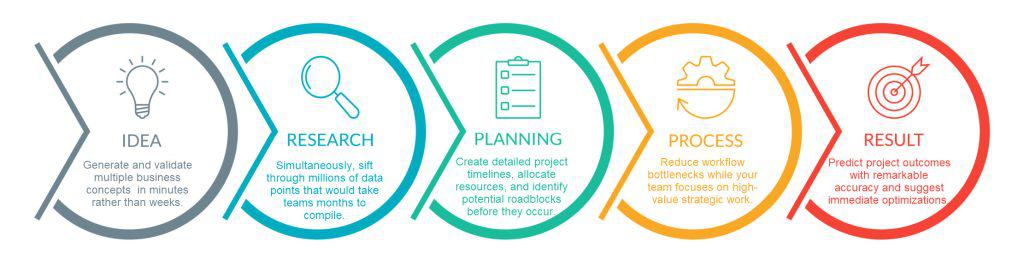
Task automation tools are at the forefront of AI adoption in SMBs, as they automate repetitive tasks such as data entry, web scraping, and workflow management. These tools save time, reduce errors, and free up staff to focus on high-value activities. For instance, AI-powered CRM systems like Zoho CRM and HubSpot use AI assistants to automate workflows, predict customer behavior, and manage leads, improving customer interactions and forecasting sales.
Tools like Notion AI and Broadly also play significant roles in task automation. Notion AI integrates content generation and task management, automating repetitive workflows and providing intelligent recommendations and insights. Broadly designed specifically for small businesses, it helps in lead generation, reputation management, and customer engagement through AI-powered platforms.
AI-Powered Content Creation: Revolutionizing Marketing and Branding
Producing engaging content can be challenging, especially for organizations tight on resources. AI-powered content creation tools like AIContentPad now enable SMBs to generate marketing blog posts, social media content, and promotional material in hours instead of days.
Jasper (formerly Jarvis) is another tool that helps small businesses with big content needs by generating high-quality content at lightning speed. Hootsuite uses AI to analyze social media performance and suggest the best times to post, optimizing digital marketing strategies without extensive manual effort.
By leveraging natural language generation techniques, these AI agents create contextually relevant content aligned with your brand’s messaging. Need a blog post on a trending industry topic? An AI content generator can create this seamlessly while incorporating SEO best practices, helping businesses attract and retain their target audiences. This technology empowers businesses to scale their content marketing efforts without requiring expansive marketing teams.
Meeting and Transcription Tools: Capturing and Organizing Knowledge
Unlike traditional meeting transcription services, AI-powered tools can now capture key moments during meetings, summarize discussions, and even flag important action items. This enhances internal communication by providing organized, searchable formats of meetings while saving the effort of manually writing summaries or minutes.
Tools like Otter.ai are particularly useful in this regard, providing real-time transcription and summarization capabilities that enhance team collaboration and productivity.
Teams can use these tools to ensure that no critical meeting information is lost, and everyone has access to key takeaways. This promotes a more collaborative and informed work culture, enabling employees to access the details they need to make quick, strategic decisions.
Code Assistance and Software Tools: Supporting Developers
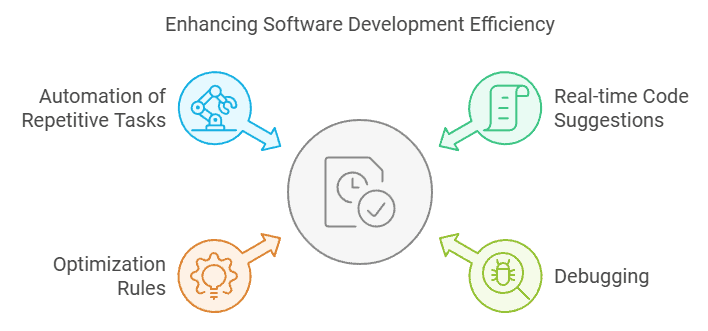
For developer teams, code assistants are proving to be indispensable. AI-based code assistance tools keep development teams efficient by offering real-time code suggestions, debugging, and even optimization rules during the software development lifecycle.
These AI tools not only help detect bugs early but can also automate repetitive coding tasks like generating test scripts, ensuring quicker and more accurate code deployment. This enables developers to devote more time to coding features that bring the highest value to the end product, thus improving overall software quality and reducing development timelines.
Customer Service Automation: AI Agent Chatbots
Customer support is typically one of the most resource-intensive departments, requiring round-the-clock availability and a fast response. AI-powered chatbot systems allow businesses to handle routine customer service queries without the need for human agents.
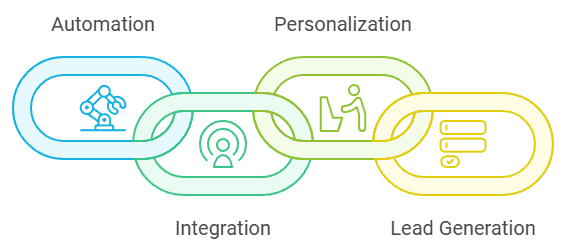
AI chatbots are increasingly sophisticated, taking on a wide range of customer concerns, from handling billing inquiries to resolving troubleshooting issues. These tools provide instant responses, improving customer experiences while freeing up your human customer service team to focus on more complicated, high-touch interactions.
The Power of Multi-Agent Systems for Complex Work Environments
AI agents often operate independently, but many businesses are optimizing with multi-agent systems—multiple autonomous AI agents working collaboratively to solve complex problems. These systems are especially useful for organizations handling large volumes of data, such as those in financial services or supply chain management.
These multi-agent AI systems act like a highly coordinated team of digital experts, each specialized in their domain yet working in concert to validate and enhance each other’s output. While one agent might draft a financial forecast, another simultaneously fact-checks the calculations and assumptions, while a third identifies market variables that could impact the projections.

This continuous cycle of creation, verification, and refinement mimics how human teams collaborate but operate at machine speed and scale. By having AI agents with different specialties cross-validate each other’s work, businesses can dramatically reduce errors, uncover blind spots, and generate more comprehensive solutions. This interconnected approach is particularly valuable in industries like healthcare, finance, or manufacturing, where decisions often require multiple layers of expertise and verification. The result is faster workflows and more reliable and nuanced outcomes that simultaneously consider multiple perspectives and potential scenarios.
a Strategic Approach to AI Agents
Assess Current Workflows and Identify Process Bottlenecks
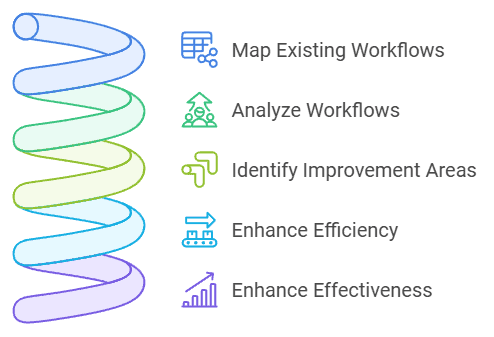
Before introducing any AI agents into your organization, comprehensive mapping of current workflows is essential. Identify where bottlenecks occur and where repetitive tasks are reducing productivity—this will help you prioritize which processes would benefit the most from automation.
As you begin to explore the integration of AI agents into your workflows, it’s crucial to take a step-by-step approach. Many SMBs mistakenly rush into AI adoption without proper consideration, leading to increased implementation expenses or failure to achieve desired ROI.
Create an AI Integration Roadmap
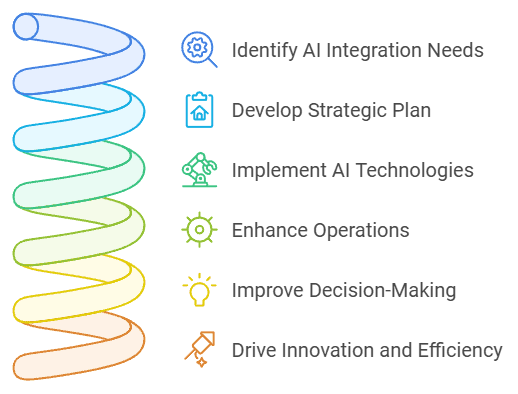
Once you’ve identified the areas that need improvement, it’s time to draft an AI integration roadmap. Start small by implementing AI agents for simple, repetitive tasks, such as data entry or meeting transcription, and gradually escalate their incorporation into more complex roles over time, such as decision-making processes or content generation.
This measured approach allows your team to build confidence with AI systems. Additionally, starting with lower-risk processes creates natural testing grounds for refining your AI governance frameworks and establishing best practices before deploying AI agents in mission-critical operations.
Organization Culture and Readiness
Successful AI adoption isn’t just about deploying the technology; it’s about ensuring your team is comfortable using it. Clear communication regarding the role of AI tools and agents in augmenting—not replacing—human roles will reduce skepticism and promote employee buy-in. Budget for continuous training so that your workforce is prepared to interact with and manage the AI tools effectively.
Why this matters: AI adoption isn’t just a technical change; it’s also a cultural shift. Understanding your organization’s readiness for change helps solution providers like PaleoTech AI recommend the right level of training and support to ensure successful adoption.
Future Perspective on AI Agents and Enterprise Workflows
Looking ahead, businesses that embrace AI agents and workflows will be better positioned to remain agile in a fast-evolving business landscape. AI agents and humans working in tandem create an adaptive, flexible environment where human creativity and AI-driven efficiency co-exist. Rather than fearing the rise of AI, SMBs should view this technology as a means to expand their operational competencies while staying ahead of competitors.
Within the next decade, AI adoption is expected to skyrocket, with increasingly sophisticated AI agents playing a much more robust role in automating enterprise systems, refining decision-making processes, and enriching customer engagement.
Is your business ready to leverage AI agents to streamline operations and boost productivity? If you’re considering a path toward AI adoption but feel uncertain about where to start, don’t hesitate to reach out. Sign up for our newsletter or send us a message on what you would like to build. If you’re just getting started, book a discovery call with our AI team.
Together, we can create a customized roadmap to integrate AI agent technology into your day-to-day workflow, helping your business lower costs and gain a competitive edge in your industry. Contact us today to learn how AI agents can transform your business.
Article Sources
- Powerful AI For Business in 2024, 2024, PaleoTech AI
- What are AI Agents, 2024, Amazon
- What are AI Agents, 2024 MIT Technology Review
- The Third Wave Of AI Is Here: Why Agentic AI Will Transform The Way We Work, 2024, Forbes
- OpenAI Readies ‘Operator’ Agent With eCommerce, Web Browsing Capabilities, 2024, PYMNTS
- OpenAI Launching New Operator AI Agent for Task Automation January 2025, 2024, Geeky Gadgets