
Issue 001 – The Rise of Reasoning AI

The Rise of Reasoning AI
In this newsletter you can expect:
Welcome to the March 2025 issue of the AI Lighthouse!
In this issue, we look at the rise of reasoning AI. This new epoch marks a significant evolution in artificial intelligence. Unlike earlier LLMs, these new models break down problems step-by-step, carefully weighing options, examining assumptions, and correcting themselves—just like humans do when tackling complex challenges.
What once existed only in science fiction is now an integral part of industries ranging from healthcare to finance. Over the past century, AI has progressed through distinct phases, each contributing to its current capabilities.
Understanding AI’s evolution provides insight into where the technology is headed and how businesses can use it to streamline operations, reduce costs, and improve efficiency. This issue explores AI’s historical development, its impact on industries, and what the future holds.
As we navigate the rapidly evolving AI landscape, your participation, insights and experiences are invaluable:
- Share the newsletter with friends and colleagues
- Follow us on our social media channels and join our LinkedIn community for discussions about the latest AI developments.
This month, we’re also sharing our final installment of our guide on Generative AI and RAG: The AI Blueprint: 90 Days to Success.
Thank you for being part of this important journey. Together, we’re shaping an AI future that serves humanity while fostering business growth and innovation.
Enjoy this month’s newsletter!
The PaleoTech AI Team
- The AI Blueprint: 90 Days to Success
- The Industry Pulse: News & More
- AI Developments: The Rise of Reasoning AI
- Claude 3.7 Sonnet, GPT 4.5 Released
- How to create lifelike AI Voices
- PaleoTech AI Spotlights
Follow us
Featured Articles:
The Rise of Reasoning AI
We’ve entered a new age in AI. The rise of reasoning AI marks a significant evolution in artificial intelligence. Unlike earlier LLMs, these new models break down problems step-by-step, carefully weighing options, examining assumptions, and correcting themselves—just like humans do when tackling complex challenges. Discover the remarkable evolution of AI technology and how it’s transforming businesses in 2024. Learn how the Rise of Reasoning AI is empowering small and medium-sized businesses to reduce costs and increase profits.
Artificial Intelligence (AI) has transformed from a theoretical concept into a driving force behind technological innovation. What once existed only in science fiction is now an integral part of industries ranging from healthcare to finance. Over the past century, AI has progressed through distinct phases, each contributing to its current capabilities.

The AI Blueprint: 90-Days To Success
The AI Blueprint: 90-Days to Success. This structured, milestone-driven approach will help you experience clear ROI and discover practical solutions for streamlining operations and boosting efficiency.
This exemplary AI Blueprint ensures your organization can begin realizing the benefits of AI automation while maintaining control and visibility throughout the implementation process. Each phase builds upon the previous one, creating a solid foundation for expanded AI capabilities in the future.


Perplexity AI’s Deep Research Tool Challenges OpenAI

🔍Spotlight
Perplexity AI has introduced Deep Research, an advanced AI tool designed to deliver expert-level research reports in minutes. By conducting multiple web searches, analyzing hundreds of sources, and synthesizing findings, it provides a structured response to complex queries. Unlike OpenAI’s costly alternative, Perplexity’s tool is free for all users, with a pro-tier offering unlimited access for $20/month.
🔮Deep Dive
- Automated Research at Scale – Deep Research autonomously runs multiple searches, evaluates sources, and compiles structured reports in under three minutes.
- Performance vs. Competitors – It scored 21.1% on “Humanity’s Last Exam,” outperforming Google’s Gemini Thinking, DeepSeek-R1, and OpenAI’s o3-mini high.
- Cost & Accessibility – Free users get five queries per day, while pro subscribers ($20/month) enjoy unlimited access. OpenAI’s alternative costs $200/month.
- Speed & Efficiency – Generates detailed reports in one to two minutes, significantly faster than OpenAI’s research tool.
🌅The Horizon
Perplexity AI’s Deep Research tool is reshaping AI-powered research by making expert-level analysis widely accessible. With its speed, affordability, and accuracy, it presents a strong alternative to OpenAI’s premium offering. As AI-driven research tools continue evolving, Perplexity’s approach could democratize information access, benefiting professionals, students, and businesses alike. Adding another line of text here.
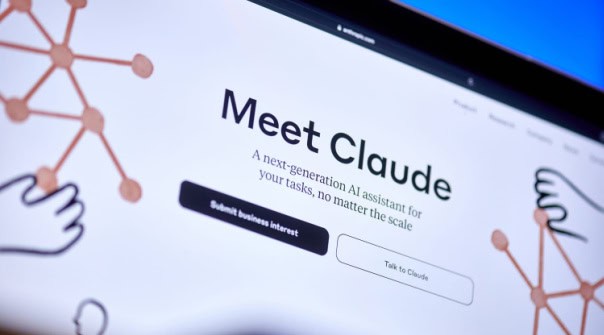
Anthropic’s Next AI Model: Claude 3.7 Sonnet
🔍Spotlight
Anthropic has introduced a new AI model that balances deep reasoning with rapid response times, offering developers more flexibility in performance and cost. The model reportedly outperforms OpenAI’s o3-mini-high in coding and business-related tasks, making it a strong contender in the competitive AI landscape. This, along with the DeepSeek r1 release in January, is signaling a shift in how AI systems are designed.
🔮Deep Dive
- Hybrid Processing. The model can switch between deep reasoning for complex queries and quick-response modes for efficiency.
- Dynamic Cost Control. Developers can adjust computing resources based on task needs, optimizing both performance and expenses.
- Performance Edge. Early reports indicate it surpasses OpenAI’s o3-mini-high in coding benchmarks and business-related decision-making tasks.
🌅The Horizon
Anthropic’s latest AI model represents a shift toward more adaptable and cost-efficient AI solutions. As competition intensifies among AI giants, this development could redefine how businesses and developers use AI for complex problem-solving. The ability to toggle reasoning depth on demand may set a new standard for AI flexibility, making advanced AI tools more practical for a wider range of industries.
OpenAI’s Trademark Hints at AI-Powered Robotics

🔍Spotlight
OpenAI has filed a trademark application with the U.S. Patent and Trademark Office, hinting at a possible expansion into AI-powered hardware. The filing includes references to smart jewelry, augmented reality headsets, humanoid robots, and even AI-assisted training devices. This move aligns with OpenAI’s broader ambitions, including its involvement in the government-backed Stargate project, which could open doors to Department of Defense contracts.
🔮Deep Dive
- AI-Driven Consumer Tech: The trademark application lists various smart devices, including headphones, smartwatches, smart jewelry, and AR headsets.
- Humanoid Robots & Robotics Team: OpenAI is actively hiring for robotics-related roles, and the filing suggests potential work on AI-powered humanoid robots.
- Government Ties – Stargate Project: OpenAI’s Stargate initiative has been linked to potential DoD contracts. This trademark filing could signal a broader strategy that includes government-backed AI applications.
- Long-Term Vision: While trademark filings don’t guarantee immediate product launches, they provide a glimpse into OpenAI’s future ambitions beyond software and chatbots.
🌅The Horizon
This filing suggests OpenAI is positioning itself as a key player in AI-powered consumer hardware and robotics. If these plans come to fruition, OpenAI could compete with companies like Apple, Meta, and Google in the smart device market. Additionally, its involvement in the Stargate project hints at a deeper relationship with government agencies, which could shape the future of AI-driven defense and enterprise applications.
Gemini Now Lets Free Users Upload and Analyze Files

🔍Spotlight
Google is rolling out file uploads for free Gemini users, a capability that was previously limited to paid Advanced subscribers. This feature enables users to upload documents, spreadsheets, and code files for summaries, insights, and even visualizations. While the rollout is ongoing, it marks a major step in making AI-powered document analysis more widely available.
🔮Deep Dive
- Expanded Access: Free Gemini users can now upload and analyze files, a feature that was previously exclusive to Advanced subscribers.
- Supported File Types: Users can upload TXT, DOC, DOCX, PDF, CSV, XLSX, Google Docs, Google Sheets, and various code files like PY, JAVA, and SQL.
- Platform Availability: The feature is accessible via the Gemini app and web interface, with Android users also able to interact with PDFs through “Ask about this PDF” in Files by Google.
- Limitations: Features like Deep Research, custom Gems, and Recall remain exclusive to paid subscribers.
🌅The Horizon
This marks a significant step in democratizing document analysis. By making file upload and analysis available to free-tier users, Google is enhancing productivity and making advanced AI tools more accessible to a broader audience. This move aligns with the broader trend of integrating AI into everyday workflows, making it easier for individuals and businesses to extract meaningful insights from their documents.
AI Developments
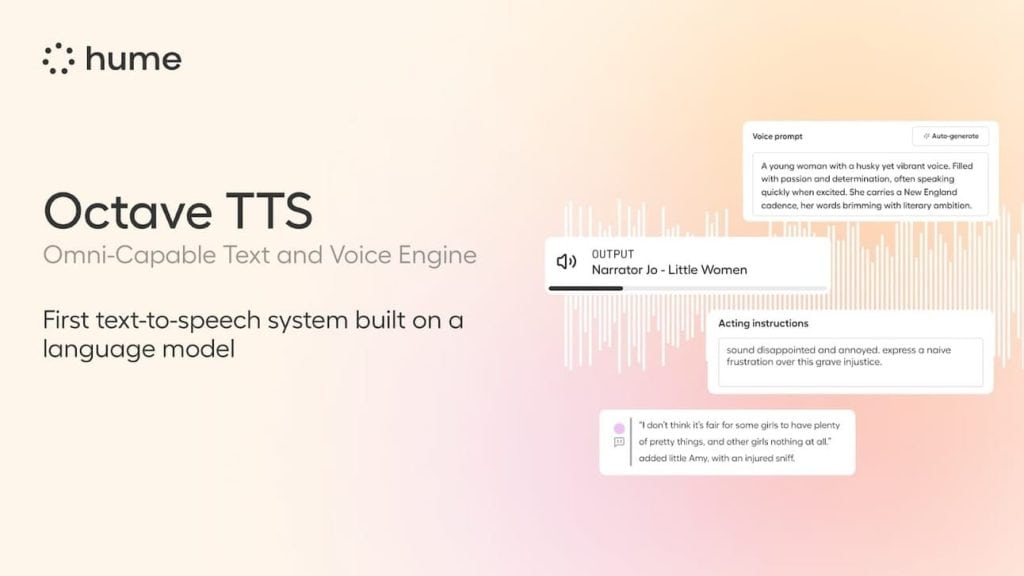
How to create lifelike AI voices that mimic human speech (takes less than 5 minutes)
Octave is the first text-to-speech system powered by a language model – so it understands context.
Unlike robotic TTS systems, Octave delivers natural, expressive speech with voices tailored to any accent, personality, or emotion–perfect for audiobooks, podcasts, and voiceovers.
Signup for Hume ➡️ Upload your script or video ➡️
Describe your ideal voice (“wise historian” or “energized coach”) ➡️
Add performance directions (“speak excitedly” or “whisper with intrigue”) ➡️
Generate variations to find the perfect clip ➡️
EXPORT AND SHARE!
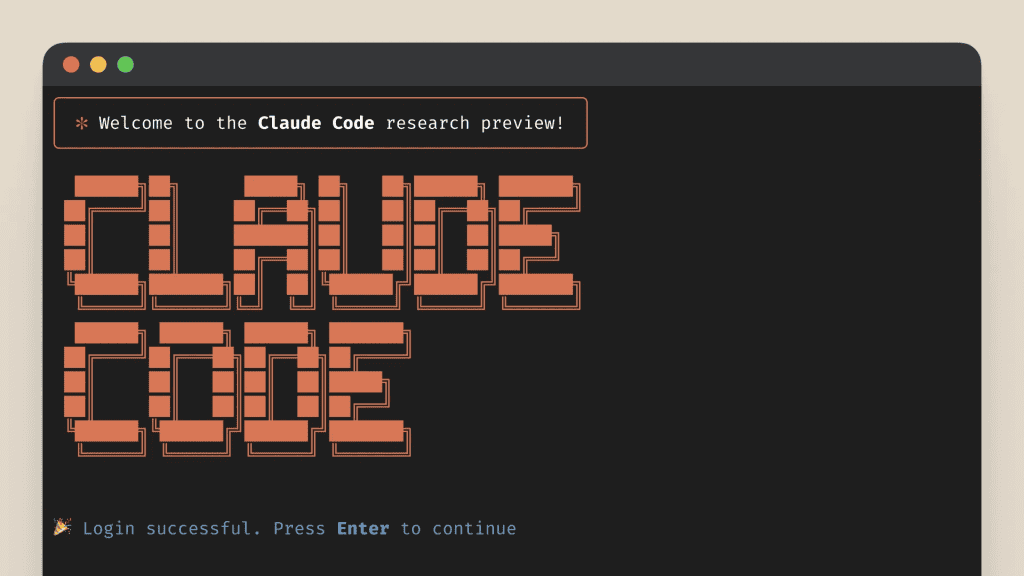
Anthropic’s Claude 3.7 release represents a significant advancement in AI capabilities, offering improved reasoning, reduced hallucinations, and enhanced performance across complex tasks. With Claude 3.7, Anthropic continues to push the boundaries of what’s possible in artificial intelligence, setting new standards for performance and reliability in the field. This release marks a significant milestone in the journey toward more capable and trustworthy AI systems.

OpenAI has introduced GPT-4.5, its most advanced AI model. This release, currently available as a research preview for ChatGPT Pro users, signals a shift in AI model development, offering improved conversational abilities and fewer hallucinations. As the AI community watches keenly, GPT-4.5 may represent OpenAI’s most significant intermediate release, potentially redefining the trajectory toward artificial general intelligence.

| Was this email forwarded to you? Sign up for free here. Interested in using AI in your organization? Click here Unsubscribe | Update your profile | 113 Cherry St #92768, Seattle, WA 98104-2205 (c) 2025 Yottabyte Dynamics Inc. |