
Issue 002 – Why The Next AI Breakthrough is Human

Why The Next AI Breakthrough is Human
In this newsletter you can expect:
Welcome to the AI Lighthouse!
In this issue, we explore why the next breakthrough in AI implementation isn’t technological—it’s human. While reasoning AI models and advanced capabilities continue to evolve rapidly, we’ve discovered that sustainable AI success emerges from something far more fundamental: people who genuinely trust and understand the technology they’re working with.
We’ve learned something big and want to share it with you: implementing AI is more than building and deploying software. Its transformative nature means that businesses must evolve entire workflows—and that’s where people become the key to success.
We’ve learned to appreciate the fact that no AI implementation succeeds unless it helps leadership and employees evolve alongside the technology. This insight led us to develop Generative AI Literacy (GAIL): a structured program designed to transform both AI enthusiasts and skeptics into confident digital collaborators who can unlock AI’s true competitive potential.
GAIL not only builds basic skills like prompt engineering, but also helps employees move beyond AI fear and anxiety into confident usage.
Through a comprehensive governance framework and carefully crafted ideation workshops, GAIL engages teams to imagine and implement AI projects that deliver continuous ROI for your business.
As we navigate this rapidly evolving landscape, your participation, insights, and experiences remain invaluable:
- Share this newsletter with colleagues who are navigating AI adoption challenges
- Connect with our growing community of business leaders embracing human-centered AI by signing up for GAIL updates
We’re also excited to introduce you to the Paleotech AI team—a diverse group of human experts who bring complementary skills in AI automation design, IT architecture, project management, and education to deliver outstanding AI solutions for our clients.
Thank you for being part of this important journey. Together, we’re proving that the most successful AI implementations happen when technology amplifies human potential rather than replacing it.
The Paleotech AI Team
- AI Training: GAIL – Generative AI Literacy
- More information on GAIL here.
- How to Talk to AI’s: Prompt Engineering
- What the hell just happened? The GPT-4.5 Failure
- Claude 4 Sonnet, Opus 4, GPT 4.1 Released
- Trump Administration AI Investigation
- Women’s GenAI Adoption Parity
- OpenAI breaks record in funding round
Follow us
Featured Articles:
Why the Next AI Breakthrough is Human
Prompt Engineering Foundations

The Next AI Breakthrough is Human
Prompt Engineering Foundations

Open Releases GPT-4.1
🔍Spotlight
OpenAI has launched GPT-4.1, the latest advancement in its GPT series, on April 14, 2025. The release includes three models—GPT-4.1, GPT-4.1 mini, and GPT-4.1 nano—ushering in larger context windows and improved instruction-following capabilities. This new generation is positioned as a major step forward for developers and researchers.
🔮Deep Dive
- Enhanced Context and Knowledge – All three models offer a remarkable 1 million token context window and have a knowledge cutoff of June 2024, making them suitable for tasks requiring vast amounts of information.
- Robust Benchmark Performance – GPT-4.1 models excelled on a variety of benchmarks, including academic knowledge (AIME, GPQA, MMLU), coding (SWE-bench, SWE-Lancer).
- Mixed Reception & Safety Concerns – The release is hailed by developers but raises concerns in the research community. Critiques highlight insufficient safety testing and signals of potential misalignment, as noted by researchers at Oxford and SplxAI.
🌅The Horizon
The release of GPT-4.1 represents a pivotal moment in the evolution of AI language models, offering unprecedented context windows and improved usability for developers. However, as these models become even more powerful, the ongoing debate around AI alignment and safety grows increasingly urgent, highlighting the dual need for innovation and responsible oversight.
📚Read about it Here
Anthropic Releases Claude 4

🔍Spotlight
Anthropic has unveiled Claude 4, marking a significant leap forward in AI development with unprecedented reasoning capabilities. The new model introduces revolutionary safety protocols and enterprise-focused features that position it as a direct competitor to GPT-4 and other leading AI systems.
🔮Deep Dive
- Model Upgrades & Performance: Claude Opus 4 is positioned as the most powerful coding model globally, outperforming previous models on coding and reasoning benchmarks such as SWE-bench and Terminal-bench.
- Dynamic Upgrades. Claude Sonnet 4 offers significant upgrades over the previous version (Sonnet 3.7), providing superior coding, improved instruction following, and greater usability.
- Performance Edge. model offers two operating modes: near-instant responses for quick tasks and ‘extended thinking’ for deep reasoning and longer workflows. Pricing remains consistent with previous versions: Sonnet 4 at $3/$15.
🌅The Horizon
These advancements in Claude 4 models represent a significant leap in AI’s ability to support software development, handle complex workflows, and collaborate on long-term tasks. By enabling deeper reasoning, better tool use, and more reliable memory, these models drive productivity, innovation, and safety for businesses and developers.
📚Read About it Here
Are You Ready for the EU AI Act’s AI Literacy Mandate?

🔍Spotlight
The European Union has introduced a groundbreaking AI literacy mandate that will fundamentally change how citizens across member states learn about and interact with artificial intelligence. This comprehensive initiative requires all EU countries to implement structured AI education programs, ensuring that European citizens develop essential skills to navigate an increasingly AI-driven digital landscape.
🔮Deep Dive
- AI Literacy Now a Legal Requirement – As of February 2, 2025, the EU AI Act mandates that all AI system providers and deployers ensure employees and contractors possess “adequate AI literacy”.
- GAIL Aligns Perfectly with EU Mandates – Paleotech’s Generative AI Literacy (GAIL) program offers a turnkey compliance solution. It features role-specific training, governance structures, and a phased rollout plan.
- US Companies Are Also on the Hook – American businesses with European ties—customers, employees, or expansion plans—must comply. Rather than scramble later, companies are using programs like GAIL proactively to meet the mandate and gain a strategic advantage through workforce upskilling.
🔭The Horizon
The EU AI Act is more than regulation—it’s a signal that AI literacy will soon be as foundational as cybersecurity or data privacy in global business. Organizations that prioritize AI education today won’t just avoid penalties—they’ll unlock innovation, reduce risk, and build future-ready teams. As governments worldwide observe this policy shift, GAIL-like programs may become a global standard for responsible and competitive AI adoption.
📚Read about it Here
UAE makes ChatGPT Plus subscription free for all

🔍Spotlight
The United Arab Emirates has become the first country to provide free ChatGPT Plus subscriptions to all its residents, eliminating the $20 monthly barrier and democratizing access to OpenAI’s most advanced features. This unprecedented government initiative includes access to GPT-4, DALL-E image generation, and priority response times, positioning the UAE as a pioneer in national AI integration.
🔮Deep Dive
- Universal AI Access Becomes Reality: The UAE is the first nation to eliminate the paywall for GPT-4 access, giving every resident access to ChatGPT Plus. This bold move radically shifts AI from a private luxury to a public good.
- Strategic Integration with National Goals. This initiative directly aligns with the UAE’s AI Strategy 2031, supporting education, entrepreneurship, and digital literacy at scale. I
- Technical and Governance Challenges Anticipated. The plan demands robust backend infrastructure—identity verification, usage monitoring, and bandwidth scaling—while also raising critical concerns around privacy, security, and equitable usage. For more information click the link below.
🔭The Horizon
The UAE’s move reframes AI access as a government responsibility, signaling the possible emergence of “AI as a public utility.” If successful, it could compel other nations to follow suit or risk falling behind in digital innovation. This marks a potential tipping point where access to advanced AI becomes not just a tool for productivity—but a new baseline for citizenship in the digital age. For more infortmation click the link below; for more information on GAIL click here.
📚Read About it Here
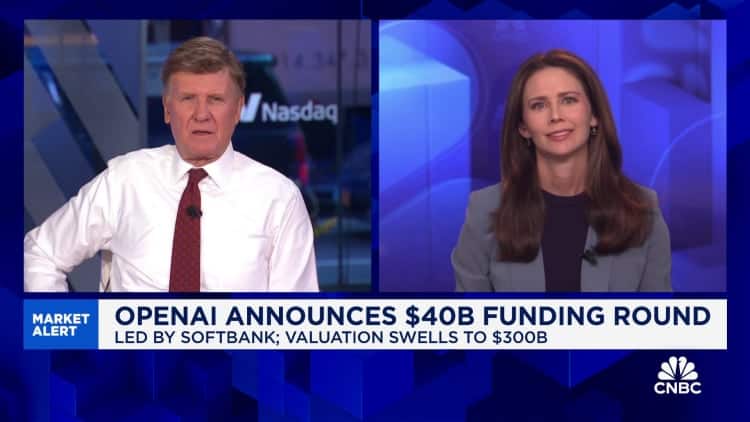
OpenAI’s Record $40B Funding biggest in History Sends Shockwaves
🔍Spotlight
OpenAI has secured a record-setting $40 billion private funding round, catapulting the ChatGPT maker’s valuation to $300 billion. Led by Japan’s SoftBank and joined by major backers including Microsoft, Coatue, Altimeter, and Thrive, this raise is unprecedented in size and signals aggressive ambitions for the future of artificial intelligence.
🔮Deep Dive
- Historic Scale: he $40 billion raise is the single largest private tech funding round ever, valuing OpenAI third among the world’s private companies, next to SpaceX and ByteDance.
- Strategic Investors: SoftBank leads the round with a $30 billion commitment, supported by Microsoft and other notable venture funds.
- AI Research and Infrastructure: OpenAI plans to use the funds to advance AI research and expand compute infrastructure, with $18 billion earmarked for its Stargate project, in partnership with SoftBank and Oracle. SoftBank’s final investment could drop to $20 billion unless OpenAI restructures into a for-profit entity.
🌅The Horizon
This funding not only affirms surging investor confidence in OpenAI’s leadership in AI but also places the organization under increased scrutiny to clarify its structure and governance as it transitions from nonprofit roots. The deal’s outcome could influence the future landscape of AI research, commercialization, and how major technology innovations are financed.
AI-Driven Layoffs Surge: Over 22,000 tech workers were laid off in 2025

🔍Spotlight
The rapid integration of AI into white-collar workplaces is leading to a new and often unsettling wave of layoffs across the U.S., disrupting jobs traditionally thought to be insulated from automation. Professionals from security operations to engineering and writing are being replaced, leaving experienced employees jobless.
🔮Deep Dive
- AI-driven Layoffs Escalate: companies like Accenture, Microsoft, Duolingo, Walmart, and GoDaddy are letting go of knowledge workers as machine learning systems match or surpass human accuracy in critical corporate tasks.
- Emotional & Moral Toll: Being replaced by AI, rather than a person, provokes feelings of depersonalization, disgust, and being discarded by the broader system, not just a single employer. Age, gender, and other demographic patterns in cuts exacerbate the sense of unfairness.
🌅The Horizon
This AI-driven shift in the workplace signals a fundamental change in the value and security of knowledge work. Jobs once thought to be stable are vulnerable, and the effects are not just economic but deeply personal and cultural. For workers and leaders alike, adaptation to AI isn’t just a competitive advantage—it’s rapidly becoming a necessity for survival.
Trump AI Investigation: subpoenas to Amazon, Google, Meta, and Microsoft

🔍Spotlight
The Trump administration has initiated a sweeping AI investigation examining federal agency practices and Big Tech compliance. This comprehensive review targets AI governance, data usage, and regulatory oversight across government departments. New executive orders and memos prioritize U.S.-developed AI, ease restrictions on industry, marking a clear departure from the oversight-driven stance of the previous administration.
🔮Deep Dive
- Federal AI Policy Overhaul: The White House Office of Management & Budget (OMB) released two memoranda—on AI usage and procurement—replacing previous Biden-era policies.
- AI Data Center Expansion (Including Coal Power): The Department of Energy identified 16 federal sites for rapid AI data center construction, aiming to start building by end of 2025 and operations by 2027.
- National Security & Chinese AI Platforms: The House Select Committee on the CCP released a report warning that DeepSeek, a Chinese AI platform, poses national security threats via data espionage and export control violations. Kansas became the latest state to ban government use of DeepSeek and other AI models linked to China and specific adversarial nations.
🌅The Horizon
These federal and state actions underscore an aggressive turn toward AI innovation, with new requirements designed to strengthen American leadership, secure government operations against foreign influence, and shape the infrastructure behind future AI growth. The push for coal-powered data centers has generated debate over environmental priorities, while a sharper focus on research and security aims to uphold U.S. interests as global AI competition intensifies.
The AI Arms Race: China’s AI Models Rapidly Close the Gap with US
🔍Spotlight
At a prominent tech conference in Washington, D.C., NVIDIA CEO Jensen Huang highlighted China’s rapid progress in artificial intelligence, singling out Huawei as a powerful global technology player. Huang emphasized the high stakes and tight race in AI innovation between the U.S. and China, particularly against the backdrop of increasing U.S. export restrictions impacting NVIDIA’s business with China.
🔮Deep Dive
- NVIDIA Pain: The U.S. government has recently tightened restrictions, limiting Nvidia’s shipments of H20 AI chips to China, leading to a forecasted $5.5 billion revenue loss for Nvidia.
- Kiss the Ring: Nvidia is moving to build AI servers in the U.S.
- AI Leadership: China surpassed the U.S. in both published AI research and patent filings, intensifying concerns about technological leadership and national security.
- Funding: The U.S. led in private AI funding, securing $109.1 billion in 2024—12 times more than China and 24 times more than the U.K.
🌅The Horizon
AI is now a cornerstone of global economic and geopolitical power, and the race for supremacy is accelerating. The U.S. must leverage its investment advantage while adapting to narrowing quality gaps and intensifying international competition, especially from China. Continued vigilance and strategic planning will be crucial to maintain innovation leadership in this foundational technology.
Exciting AI Developments
Responsible AI Governance Focus
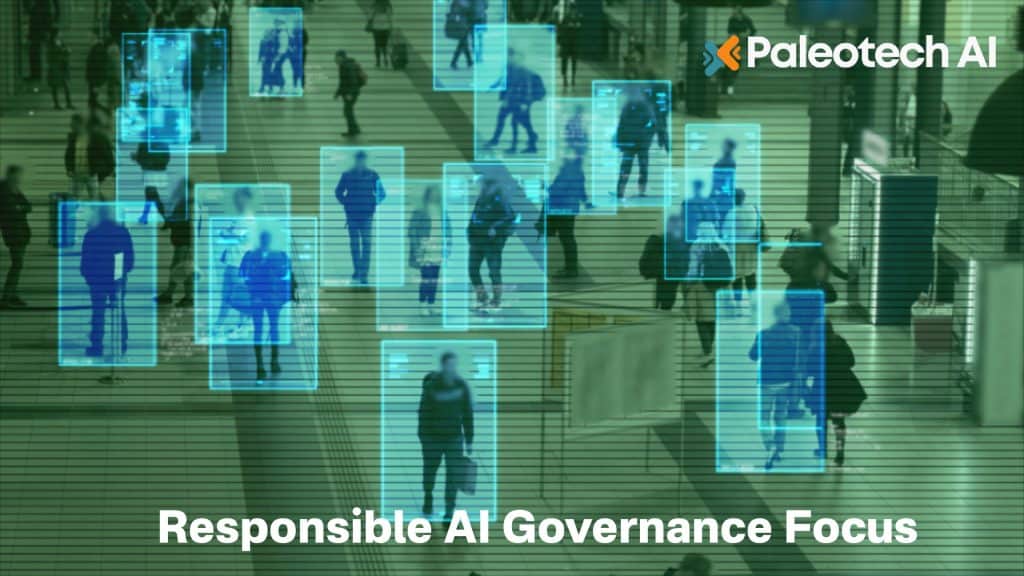
The era of “move fast and break things” in AI development is rapidly coming to an end. A striking 87% of enterprises now prioritize responsible AI principles as they race to implement comprehensive governance frameworks that balance innovation with ethical deployment. This isn’t just a compliance checkbox—responsible AI has emerged as one of three defining strategic pillars reshaping 2025, standing alongside agentic AI and scalable AI as fundamental to competitive advantage. Organizations are discovering that ethical AI governance isn’t a barrier to growth but rather the foundation that enables sustainable enterprise adoption and protects against regulatory backlash that could derail billion-dollar AI investments.
The stakes have never been higher. As generative AI systems become more powerful and autonomous, the potential for unintended consequences—from algorithmic bias to data privacy violations—grows exponentially. Companies that establish robust AI governance frameworks now are positioning themselves not just for regulatory compliance, but for long-term market leadership. Early adopters of responsible AI practices are finding they can move faster and with greater confidence, knowing their systems are built on ethical foundations that won’t collapse under scrutiny. Meanwhile, organizations that neglect governance are increasingly finding themselves excluded from enterprise deals, facing regulatory penalties, and losing public trust—making responsible AI governance a business imperative that directly determines which companies will thrive in the AI-driven economy.

Google I/O AI Mainstream Integration – Google has fundamentally transformed how the world searches for information, launching a sweeping AI revolution that reaches billions of users daily. The company’s AI Mode integrates multimodal capabilities, real-time visual search, and autonomous AI agents that can handle complex tasks from event bookings to sophisticated data analysis. The results are staggering: AI Overviews usage exploded by over 500% in entertainment, 387% in restaurants, and 381% in travel queries during March alone. This isn’t just an incremental improvement—it’s a seismic shift that’s redefining the very nature of information discovery and consumption for billions of people worldwide.
The ripple effects extend far beyond search itself, creating an existential crisis for traditional digital marketing and content strategies. Publishers who once relied on click-through traffic are watching their revenue streams evaporate as AI provides comprehensive answers directly in search results. Meanwhile, businesses that fail to optimize for AI-powered search risk becoming invisible to consumers, while early adopters are discovering new opportunities to engage customers through AI-native experiences. Google’s integration represents the tipping point where AI transitions from novelty to necessity, forcing every digital business to fundamentally rethink their customer acquisition strategies or risk being left behind in the new AI-first information economy.
Women’s GenAI Adoption Parity – A revolutionary shift is reshaping the AI landscape as women demolish the digital divide with unprecedented speed and determination. Women’s experimentation and usage of generative AI is projected to not just meet but potentially exceed that of men in the US by the end of 2025, representing a remarkable tripling of adoption over the past year. This isn’t just statistical progress—it’s a testament to women’s rapid embrace of transformative technology that many initially assumed would favor male users. The closing of this gender gap represents a seismic expansion of the addressable market for generative AI products and services, fundamentally altering the trajectory of mainstream adoption and unlocking billions in previously untapped revenue potential.
What makes this transformation truly extraordinary is its speed and implications for the future. Women aren’t simply catching up—they’re actively redefining how generative AI is used across industries, from creative fields to business strategy, healthcare to education. As women achieve parity and potentially leadership in GenAI adoption, they’re bringing diverse perspectives, use cases, and innovations that are expanding the technology’s capabilities and applications in ways the industry never anticipated.
This surge represents more than market opportunity; it’s a powerful demonstration of women’s ability to rapidly master and leverage cutting-edge technology, positioning them as key drivers of the AI revolution. Companies that recognize and cater to this female-led adoption wave will not only tap into enormous market potential but will benefit from the unique insights and approaches women bring to AI innovation.

Enterprise AI ROI Acceleration – The boardroom conversation has shifted from “Should we invest in AI?” to “How fast can we scale our AI initiatives?” as executives witness the technology’s transformative potential firsthand. A commanding 75% of C-level executives now rank AI and GenAI among their top three strategic priorities for 2025, backing their conviction with unprecedented financial commitments—GenAI budgets are surging 60% from 2025 to 2027. The scale of investment is breathtaking: 68% of companies are committing between $50-250 million to GenAI initiatives over the next year alone. This represents far more than incremental technology adoption—it’s the pivotal moment when generative AI transitions from experimental curiosity to mission-critical business infrastructure with measurable, bottom-line impact.
What’s driving this massive capital allocation isn’t hype but hard results. Early enterprise adopters are reporting productivity gains of 20-50% in specific functions, cost reductions measured in millions, and entirely new revenue streams that didn’t exist two years ago. The companies making these substantial investments aren’t gambling—they’re responding to concrete evidence that GenAI delivers competitive advantages too significant to ignore. Those hesitating risk being left behind as first-movers establish AI-powered operational efficiencies and customer experiences that become increasingly difficult to match. The window for strategic AI adoption is rapidly narrowing, transforming what was once an optional technology experiment into an existential business imperative that will separate tomorrow’s market leaders from the companies that become cautionary tales.

AI-Driven Workforce Automation Surge – The future of work has arrived with jarring suddenness, as even the most skilled professionals find themselves competing directly with artificial intelligence. Microsoft’s recent layoffs delivered a stark wake-up call: software engineers—once considered immune to automation—comprised 40% of cuts as the company revealed that AI now writes 30% of its code, contributing to over 22,000 tech workers losing their jobs globally in 2025. This isn’t an isolated incident but part of a sweeping transformation, with 41% of employers worldwide planning workforce reductions as AI automates increasingly sophisticated tasks.
The speed and scope of this shift is validating investor confidence in automation’s cost-saving potential while fundamentally reshaping the economic value of human expertise across industries.
What makes this transformation particularly profound is that it’s targeting knowledge workers who never imagined their roles were vulnerable to automation. The traditional narrative of AI replacing only manual or routine jobs has been shattered as generative AI demonstrates capabilities in coding, analysis, writing, and creative tasks that were recently considered uniquely human domains. However, this disruption also presents an unprecedented opportunity for workforce evolution. Companies and workers who adapt quickly—focusing on AI collaboration, complex problem-solving, and uniquely human skills like emotional intelligence and strategic thinking—will find themselves more valuable than ever.
The organizations thriving in this new landscape aren’t simply replacing humans with AI; they’re creating hybrid human-AI teams that achieve productivity levels neither could reach alone, suggesting that the future belongs not to those who resist this change, but to those who master the art of working alongside artificial intelligence.

| Was this email forwarded to you? Sign up for free here. Interested in using AI in your organization? Click here Unsubscribe | Update your profile | 113 Cherry St #92768, Seattle, WA 98104-2205 (c) 2025 Yottabyte Dynamics Inc. |